
Preliminary research
A. Keramopoullos
The discovery of Dispilio
The discovery of Dispilio is due to the presence of a fortress of the classical era built on the ruins of the prehistoric settlement. This fortress was visited in the 1930s by an eminent archaeologist from Athens, of Western Macedonian origin, Antonios Keramopoullos, who was interested in the fortified settlements of that time. Keramopoullos noticed that numerous wooden posts could be seen in the lake and connected the find with the lake settlements of Switzerland and southern Germany, known since the 19th century. Through a small-scale excavation, he collected archaeological material and dated the settlement to the Neolithic Age. Finally, in his first report on Dispilio, he highlighted the 'littoral' settlements at Lake Prasias, in the Struma region, described by Herodotus in Book V:16.
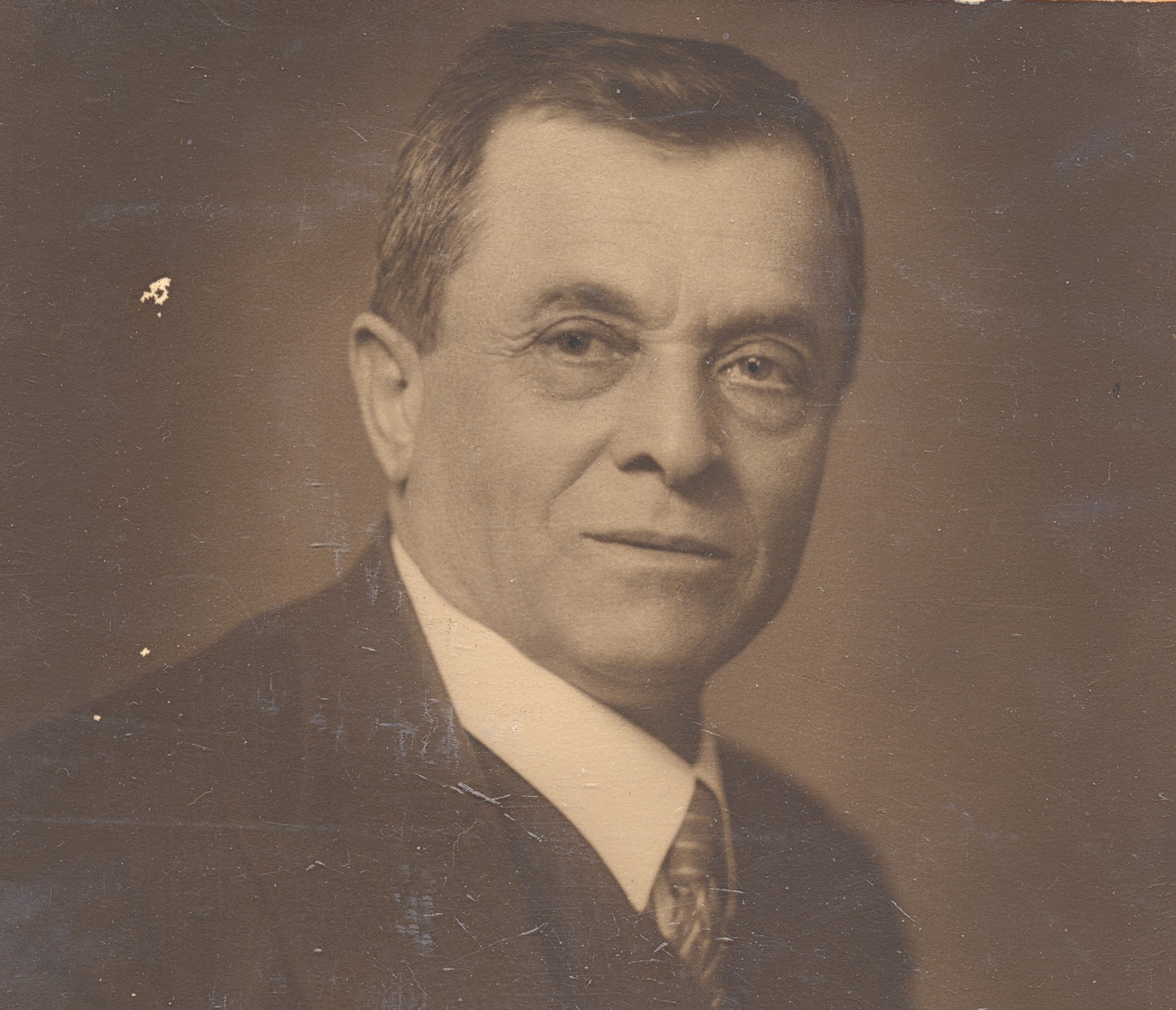
Antonios Keramopoullos (1870-1960), Professor of Archaeology at the University of Athens and the first excavator of Dispilio.
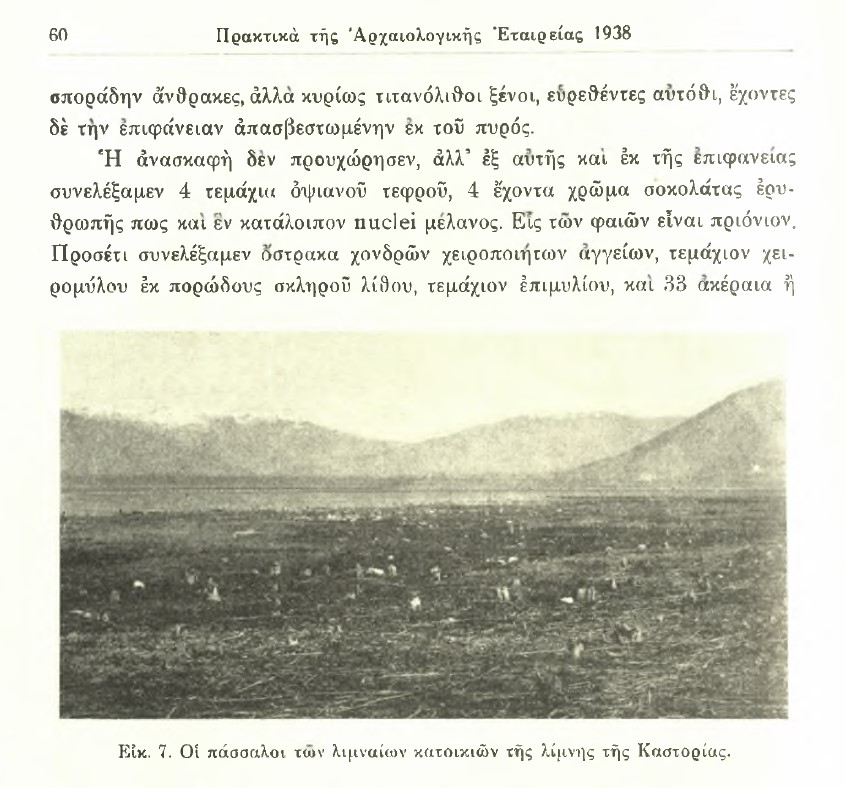
The first published report of the Dispilio excavation by A. Keramopoullos, in Proceedings of the Archaeological Society at Athens (1938).
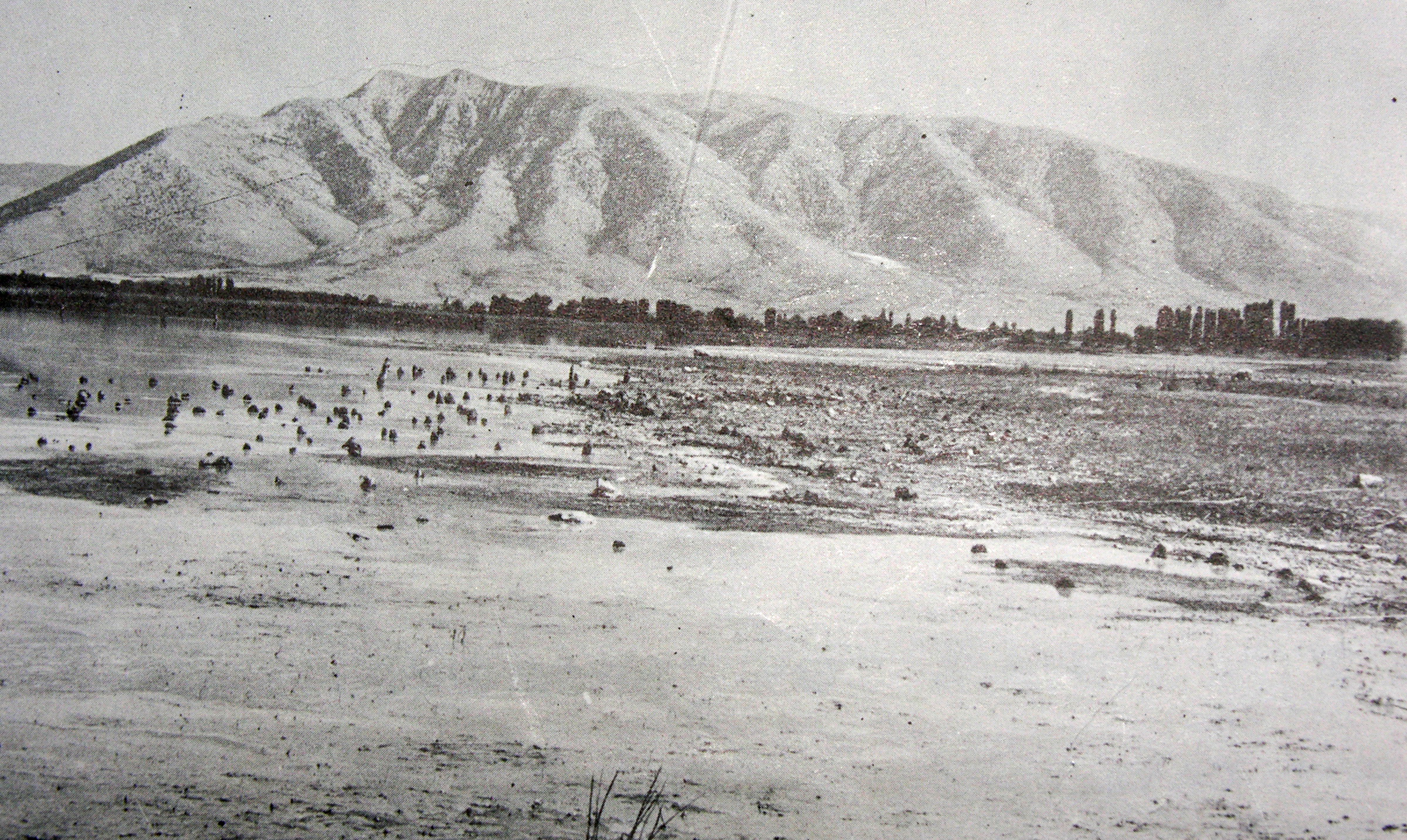
General view of the southern shore of Lake Orestis at Dispilio, mid-1930s, showing the wooden posts.
N. Moutsopoulos
Dispilio in the foreground
After the discovery of Keramopoullos, Dispilio was forgotten and for almost sixty years no research was undertaken in this interesting lakeside settlement, the only one in Greece until then. The conditions did not help, Northern Greece was severely tested, war, battles, world and civil war, then migration, the region was deserted and the questions were left unanswered before they were even asked. At this point, the role of Nikolaos Moutsopoulos, Professor of History of Architecture at the Aristotle University of Thessaloniki, should be noted. In the early 1960s, Nikolaos Moutsopoulos visited Dispilio and its fortified castle, and brought back to the fore the Neolithic site that he characterised as 'lake site'. He even published a hypothetical sketch showing Dispilio in a form that was to be realized later in the reconstruction to be built east of the archaeological site.
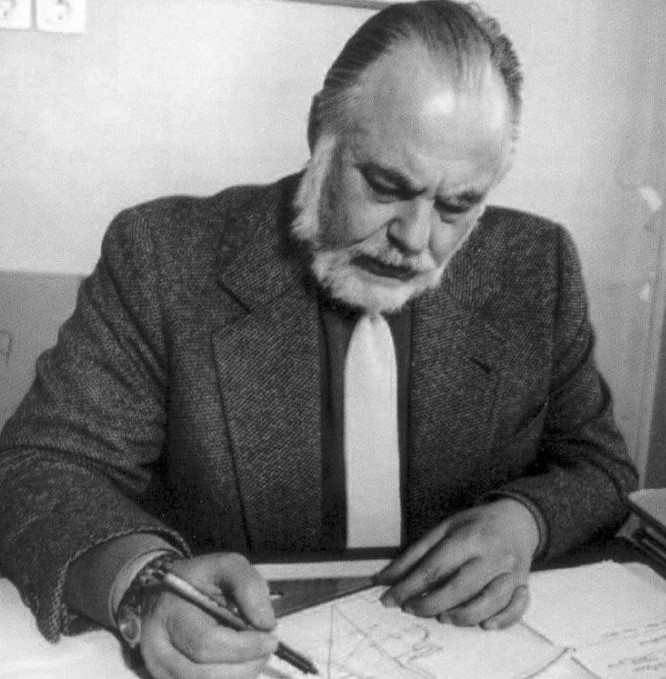
Nikolaos Moutsopoulos (1927-2019), Professor of Architecture at the Aristotle University of Thessaloniki, the scholar who revitalized research on Neolithic Dispilio.